
About JAEP
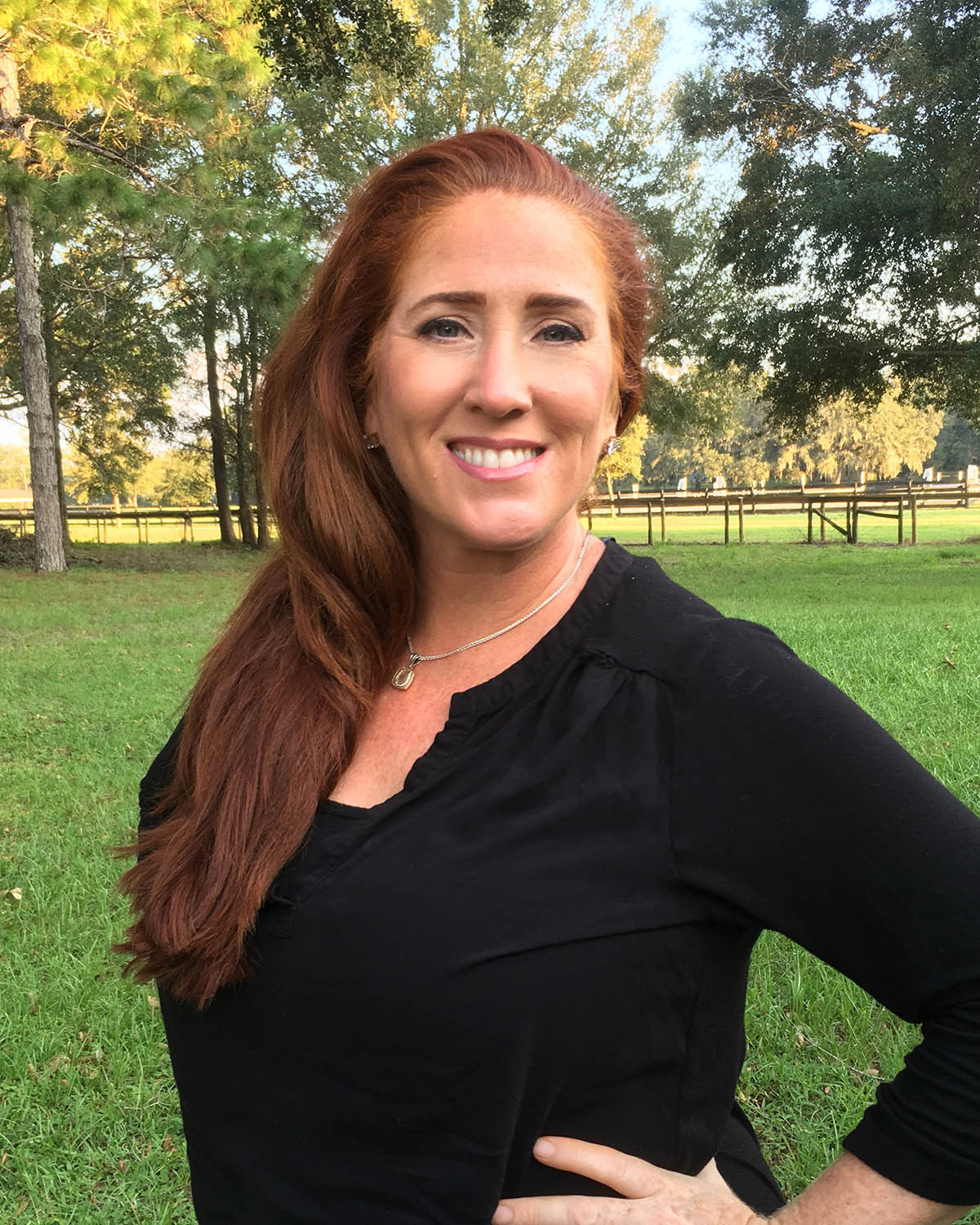
Founder Lark René Henry has generations of equestrians on both sides of the family tree, starting with her parents, Louise Orcutt Henry and Woodrow Henry, Jr., both of whom play an active role in JAEP’s operation.
Her paternal grandparents, Vivian and Woodrow Henry Sr., established the original Bobbin Hollow Farm in 1960, located on 370 acres in Amherst, Massachusetts. Specializing in Saddlebred and Morgan horses, Bobbin Hollow grew into one of the top show barns in the country.
Devotion to the well being of horses and the education of humans for the benefit of horses.
Lark René Henry
In addition to their success in the show ring, the Henrys were even better known for their Camp Bobbin Hollow, Vivian’s brainchild, which attracted hundreds of students from the United States and abroad for decades. Attendees learned saddle seat, hunt seat, jumping, evening, and dressage, frequently returning every year throughout their childhoods. With approval from the United Nations, the camp also became popular with delegates’ children from all over the world.
Bobbin Hollow also enjoyed notoriety as breeders of many champion Saddlebred and Morgan horses. Vivian and Woody had two children, Marsha and Woodrow Jr., Lark’s father, who both became well-respected professionals in the equine community.
The history goes deeper, Lark’s maternal grandparents, Lyman and Ruth Orcutt, were the founders of Orcland Farm in West Newbury, Massachusetts, where they bred and developed some of the finest Morgan horses in the country. Morgans carrying the Orcland prefix have been recognized and cherished for almost a century. Lyman’s daughter, Louise Orcutt Henry (Lark’s mother), grew up on Orcland Farm and was an integral component from the moment she first sat atop a horse.
Today, the Henry and Orcutt families live on 89 acres in beautiful Reddick, Florida, just north of Ocala. Louise runs the stable’s lesson program, where she shares her expertise with her students. Her sister, Liz, has also joined the family farm and plays a key role in the care of the horses. Woody is also in residence, and enjoys working horses, attending shows, consulting, and spending his free time fishing.
Using history to pave a path to the future.
This rich legacy has allowed Lark to not only become a World Champion horse trainer herself, but also to gain a unique perspective of the horse industry as a whole. This allows her to understand the multifaceted relationship between horse rescue, athletics, and equine veterinary medicine. It is from this discernment that the three pillars of the Johnny Appleseed Equine Project’s mission are derived. Using the knowledge Lark’s family has accumulated over generations, JAEP hopes to maximize its impact on the horse world and become a beacon of hope and a model for equine welfare.
The Johnny Appleseed Equine Project continues to weave a legacy of care, education, and community, ensuring a brighter future for both horses and the people who love them. Under Lark’s leadership, JAEP embraces a holistic approach. The foundation starts with rescue initiatives, where horses that have been abandoned or mistreated find a haven and are rehabilitated with care and expertise. These efforts are just the beginning, laying the groundwork for future endeavors. JAEP’s vision includes job training programs, allowing community members to hone the skills needed to work in the equine industry, as well as educational support for young people aspiring to become equine veterinarians, nurturing their passion for horses alongside their academic pursuits. These efforts will foster a compassionate community, which Lark believes is as vital as caring for the horses themselves.
Who was Johnny Appleseed?
A “once in a lifetime horse” is a privilege that every equestrian hopes to experience in their career. For Louise Orcutt Henry, a Morgan horse named Johnny Appleseed was just that horse. Johnny came to the Orcutt family farm as a two year old and initially showed potential for the roadster to bike division. He became Louise’s project and she started him under saddle. Due to Johnny’s aptitude for speed, they initially found success in both the Junior Exhibitor and the Open Road Hack classes, as well as the half-mile trotting race. But Louise saw Johnny’s potential to do even more.
She took him to school with her with ambitions to try Eventing. She initially received criticism from her trainer, who told her that “Johnny couldn’t event,” but that only inspired Louise to prove her wrong. The pair began working on show jumping, eventually making their debut at the famous New England Morgan Horse Show, where they earned the blue ribbon in their new discipline. They went on to school dressage and cross country, the remaining legs of three-day eventing, earning accolades from their former naysayers. Louise and Johnny proved they could accomplish anything through their bond as a team.
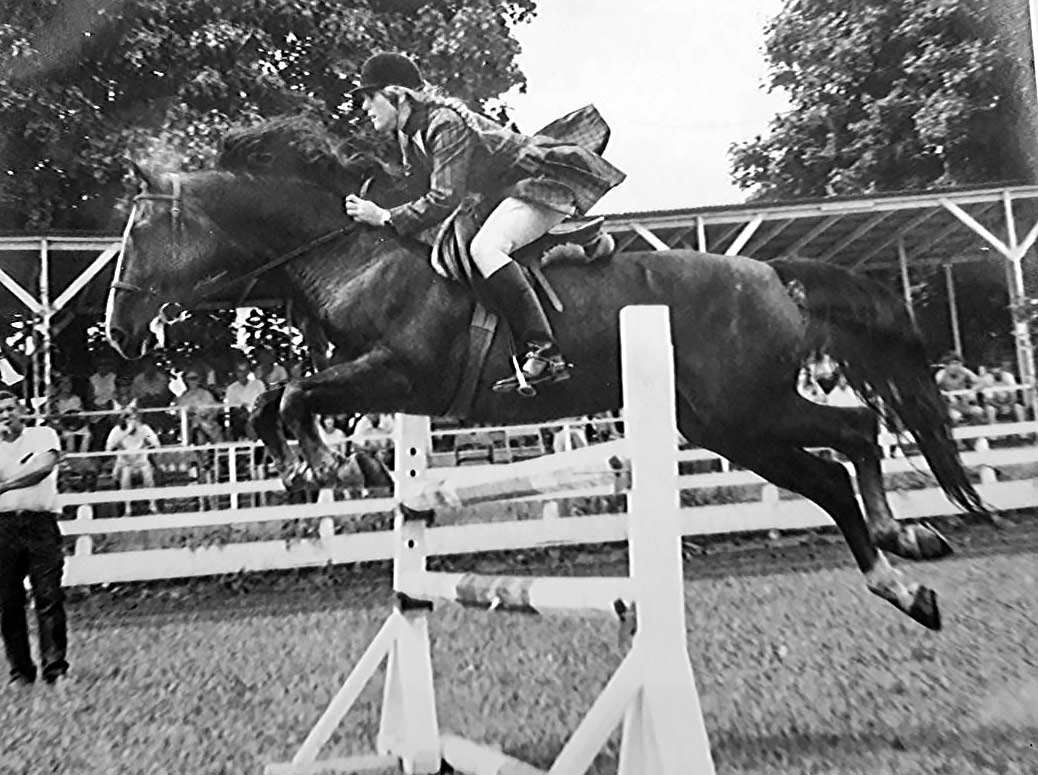
Not only is the story of Johnny Appleseed one that is near and dear to the hearts of the Henry family, but it is analogous to the mission of JAEP. Johnny was the epitome of versatility. His success was a testament to hard work and illustrates the value that can be gained through appreciating the interconnectedness of the horse world. This sentiment captures the essence of the JAEP’s mission of bettering the horse community through a multifaceted approach, informed by the first-hand experience of the Henry family.